Performing CPR
Warning: Undefined array key "src" in /var/www/vhosts/nucoplus.com/elearning.nucoplus.com/wp-content/plugins/presto-player-pro/inc/Blocks/BunnyCDNBlock.php on line 156
Start with 30 Chest Compressions
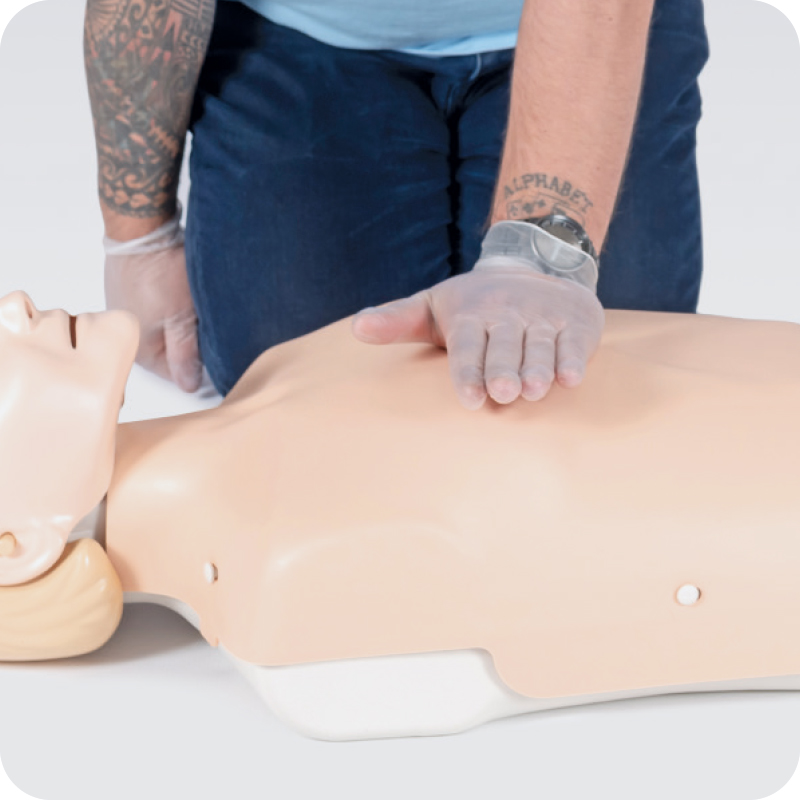
- Kneel by the side of your casualty
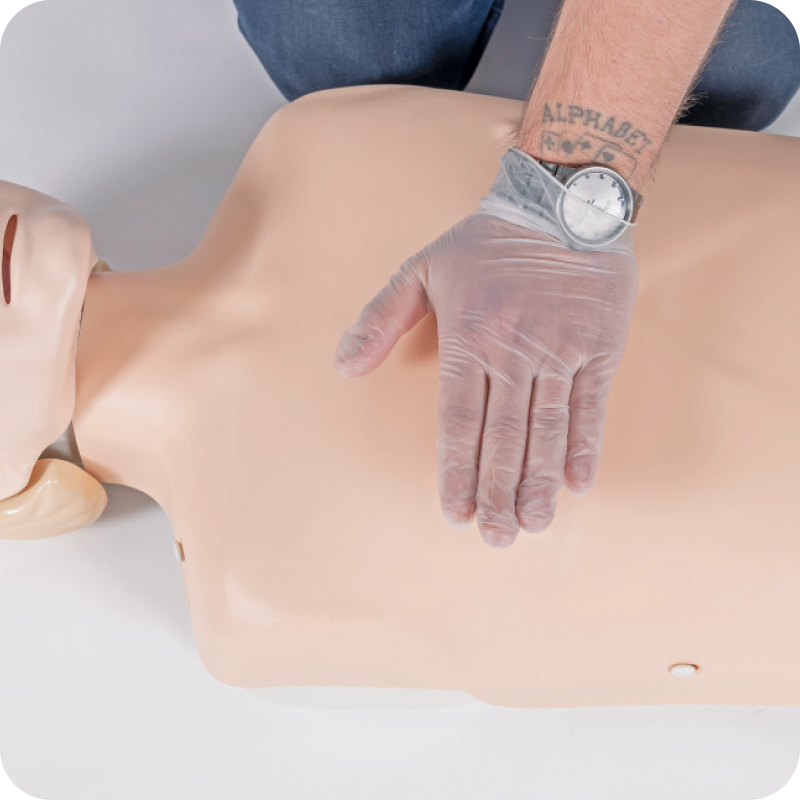
- Place the heel of one hand in the centre of the casualty’s chest (which is the lower half of the casualty’s breastbone)
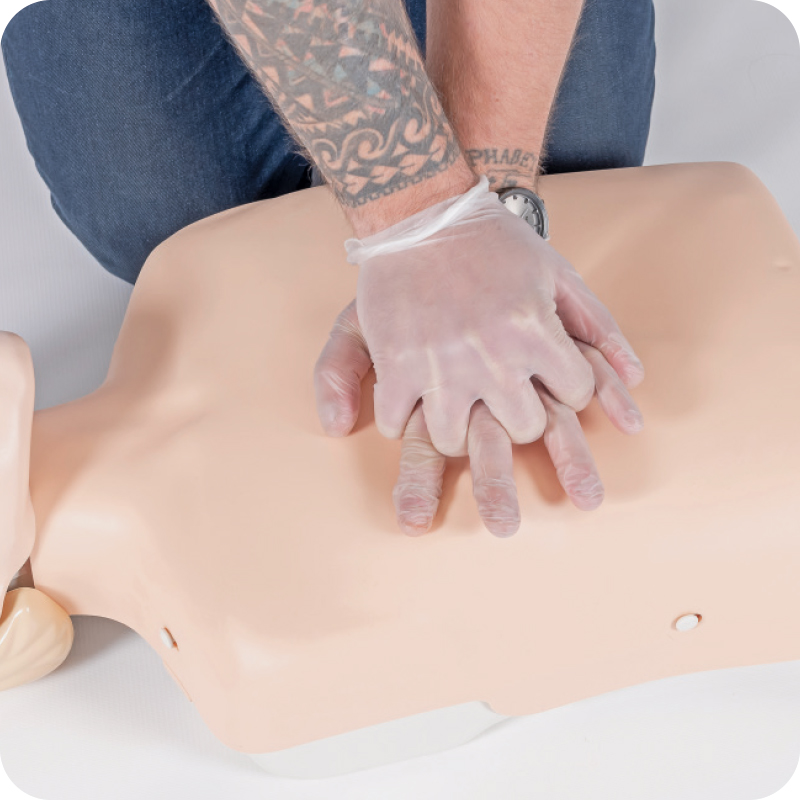
- Place the heel of your other hand on top of the first hand-
- Interlock the fingers of your hands and ensure that pressure is not applied over their ribs. Do not apply any pressure over the upper abdomen or the bottom end of the sternum
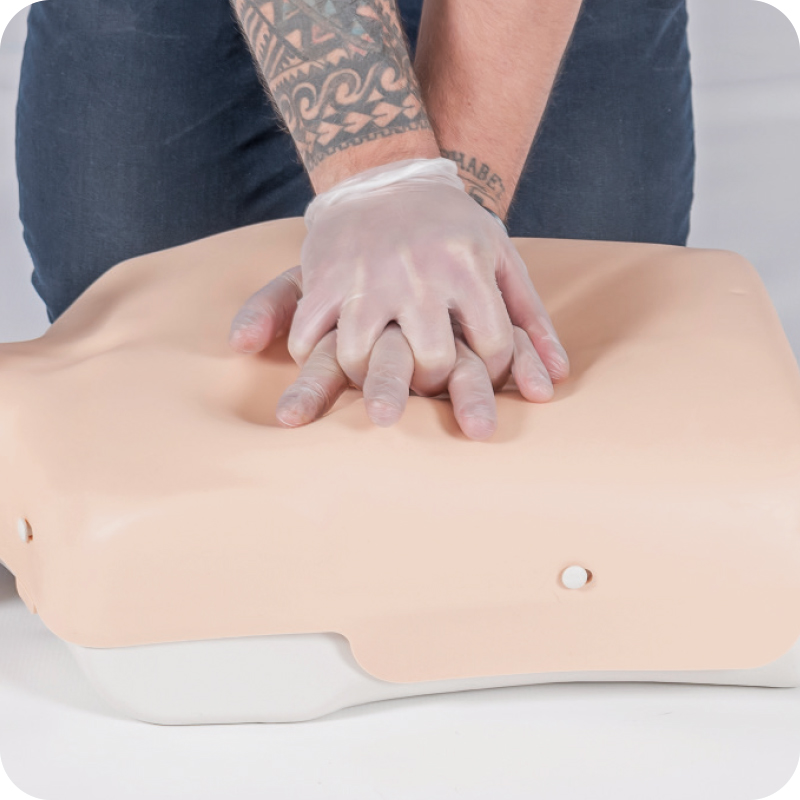
- Position yourself vertically above their chest and, with your arms straight, press down on the sternum approximately 5 to 6 centimetres
- After each compression, release all the pressure on the chest without losing contact between your hands and the sternum. Do not lean on the chest
- Repeat 30 chest compressions at a speed of 100 to 120 compressions per minute with as few interruptions as possible
- Compression and release should take an equal amount of time
In most circumstances it will be possible to identify the correct hand position for chest compressions without removing the casualty’s clothes but if you are in any doubt remove outer clothing.
Give 2 Rescue Breaths
After 30 chest compressions open the airway again using head tilt and chin lift.
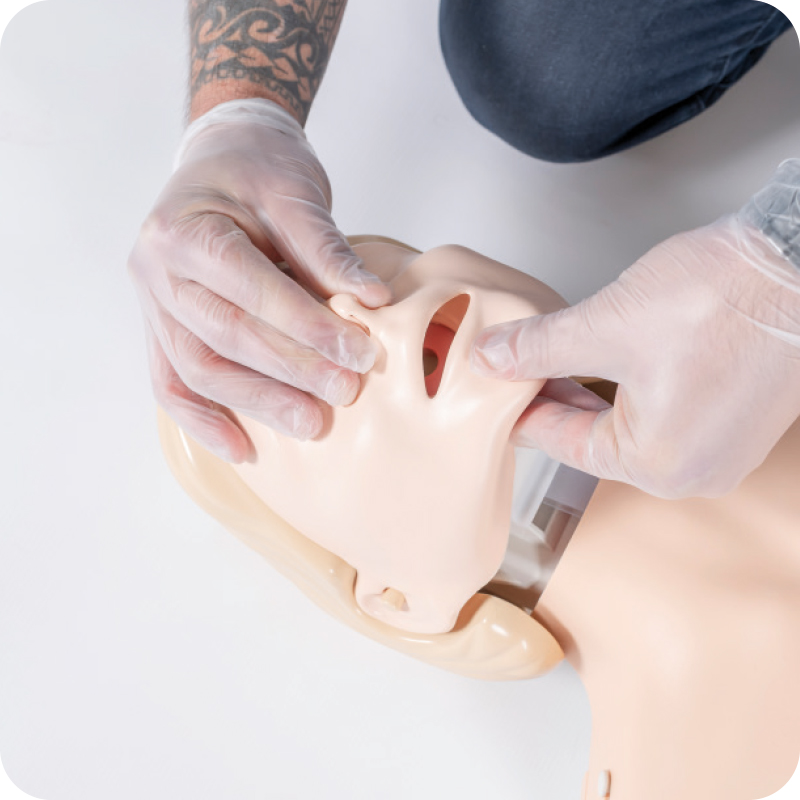
- Pinch the soft part of their nose closed, using the index finger and thumb of your hand on their forehead
- Allow their mouth to open, but maintain chin lift
- Take a normal breath and place your lips around their mouth, making sure that you have a good seal
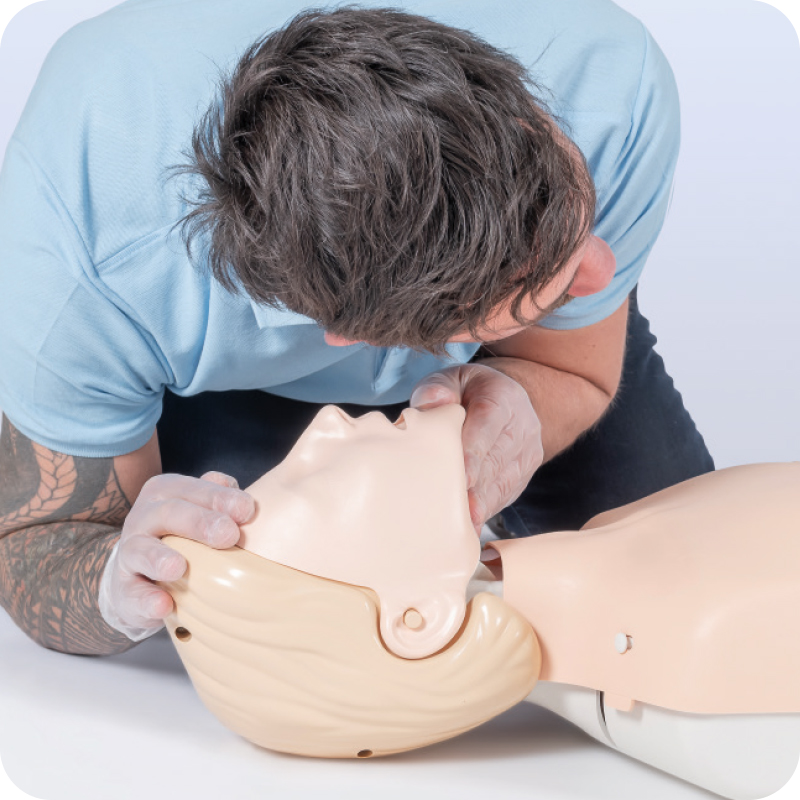
- Blow steadily into their mouth whilst watching for their chest to rise, taking about one second as in normal breathing; this is an effective rescue breath
- Maintaining head tilt and chin lift, watch for their chest to fall as air comes out
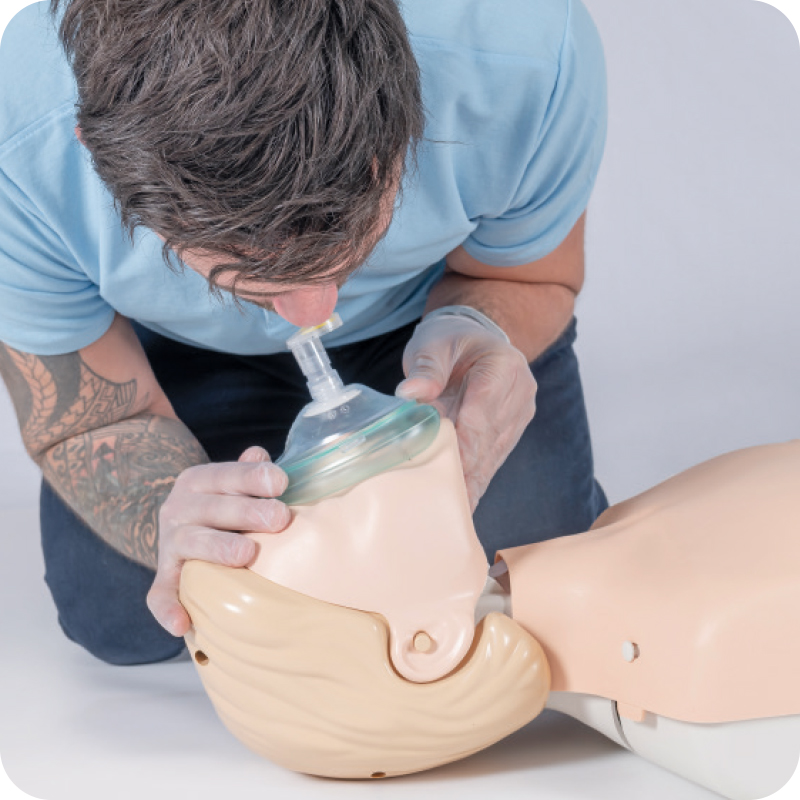
- Take another normal breath and blow into the casualty’s mouth once more to achieve a total of two effective rescue breaths. Do not interrupt compressions by more than 10 seconds to deliver two breaths. Then return your hands without delay to the correct position on the sternum and give a further 30 chest compressions
If the initial rescue breath of each sequence does not make the chest rise as in normal breathing, before your next attempt check:
- The casualty’s mouth and remove any visible obstruction
- That there is adequate head tilt and chin lift
Do not attempt more than two breaths each time before returning to chest compressions.
Repeat 30 compressions and 2 breaths until:
- A health professional tells you to stop
- The casualty is definitely waking up, moving, opening their eyes and breathing normally
- You become exhausted
It is rare for CPR alone to restart the heart. Unless you are certain the casualty has recovered, continue with CPR.
Signs the casualty has recovered include:
- Waking up
- Moving
- Opens eyes
AND
- They start breathing normally again
Be prepared to restart CPR immediately if the casualty deteriorates.
It must be emphasised that if you are unable to give rescue breaths for whatever reason you must continue with compression only CPR.
If there is more than one rescuer present, another should take over CPR about every 1 to 2 minutes to prevent fatigue.
Ensure the minimum of delay during the changeover of rescuers and do not interrupt chest compressions.
If you have access to an AED
As soon as it arrives, switch it on and attach the electrode pads on the casualty’s chest. Follow the voice prompts. If more than one rescuer is present, CPR should be continued whilst the electrode pads are being attached to the chest.