Recognition and Treatment of Choking
CHOKING – RESPONSIVE CASUALTY
There are many factors that can contribute to a respiratory disorder, including asthma, hypoxia, smoke inhalation and choking.
Choking is probably the most common of the disorders and probably the most distressing to suffer and to deal with.
Your immediate treatment is required. Should your casualty become unresponsive as a result of choking, then you will have to start resuscitation. You should suspect choking if someone is unable to speak or talk, particularly if they’re eating.
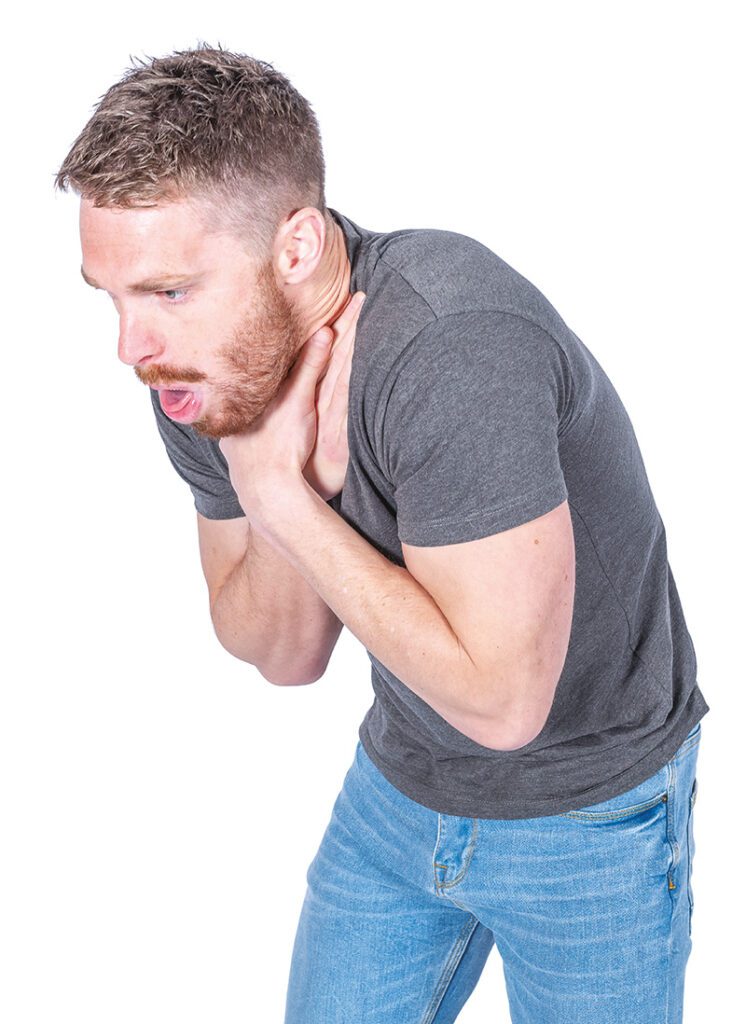
Recognition of someone choking
- Difficulty in speaking and breathing
- Coughing or gagging
- Clutching at the throat and pointing to the mouth
- Pale, grey/blue skin tone in the later stages (cyanosis)
- Ultimately – unresponsiveness
If your casualty shows signs of a mild or partial airway obstruction:
- Encourage them to cough
- Stay calm and offer plenty of encouragement and reassurance
If coughing becomes ineffective provide treatment for a severe airway obstruction for an adult:
- Check their mouth and remove any obvious obstruction

Bend them forward and give up to five back blows

- Stand to the side and slightly behind your casualty
- Support the chest with one hand and lean them forward so that when the obstructing object is dislodged it comes out of the mouth rather than to go further down the airway
- Give up to five sharp blows between their shoulder blades with the heel of your other hand
- Check to see if each back blow has relieved the airway obstruction
- The aim is to relieve the obstruction with each blow rather than to give all five unnecessarily

Give them up to five abdominal thrusts
- Stand behind your casualty and put both arms round the upper part of their abdomen
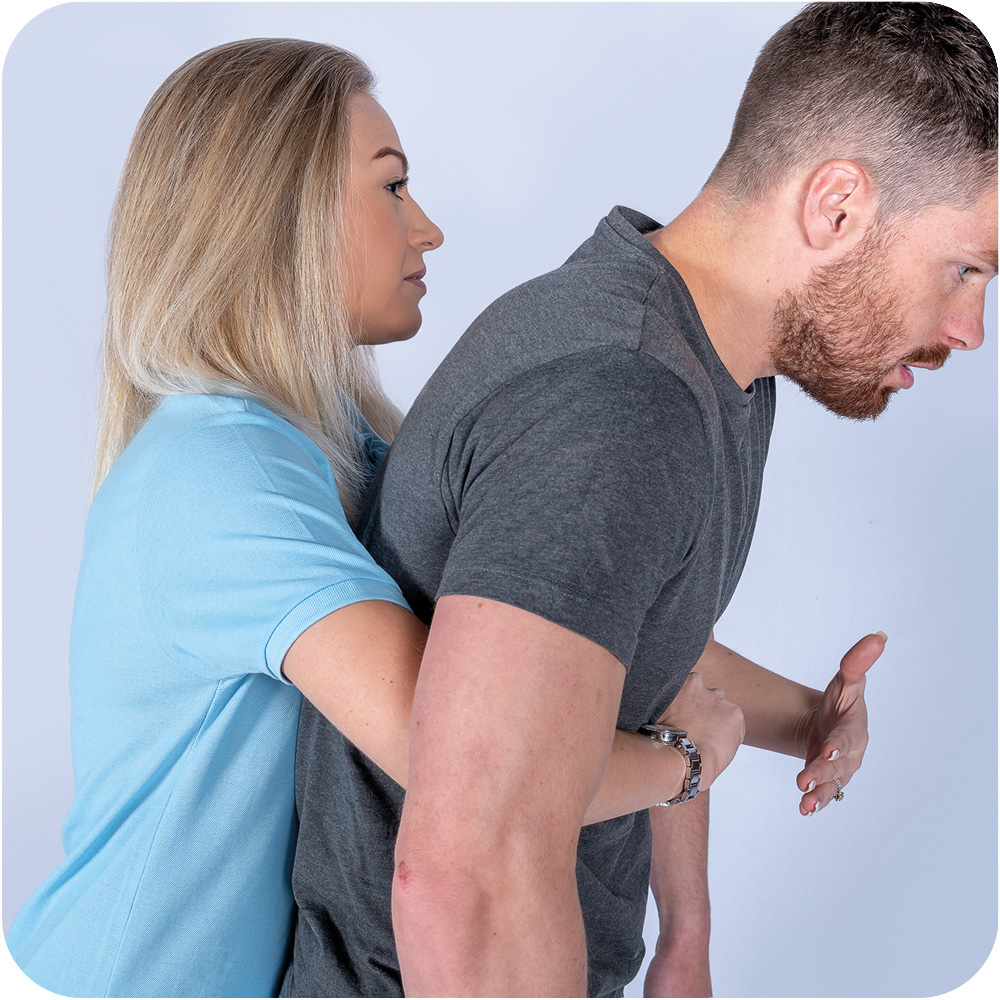
- Lean them forward
- Clench your fist and place it between the umbilicus (navel) and the bottom end of their sternum (breastbone)

- Grasp this hand with your other hand and pull sharply inwards and upwards
- Repeat up to five times
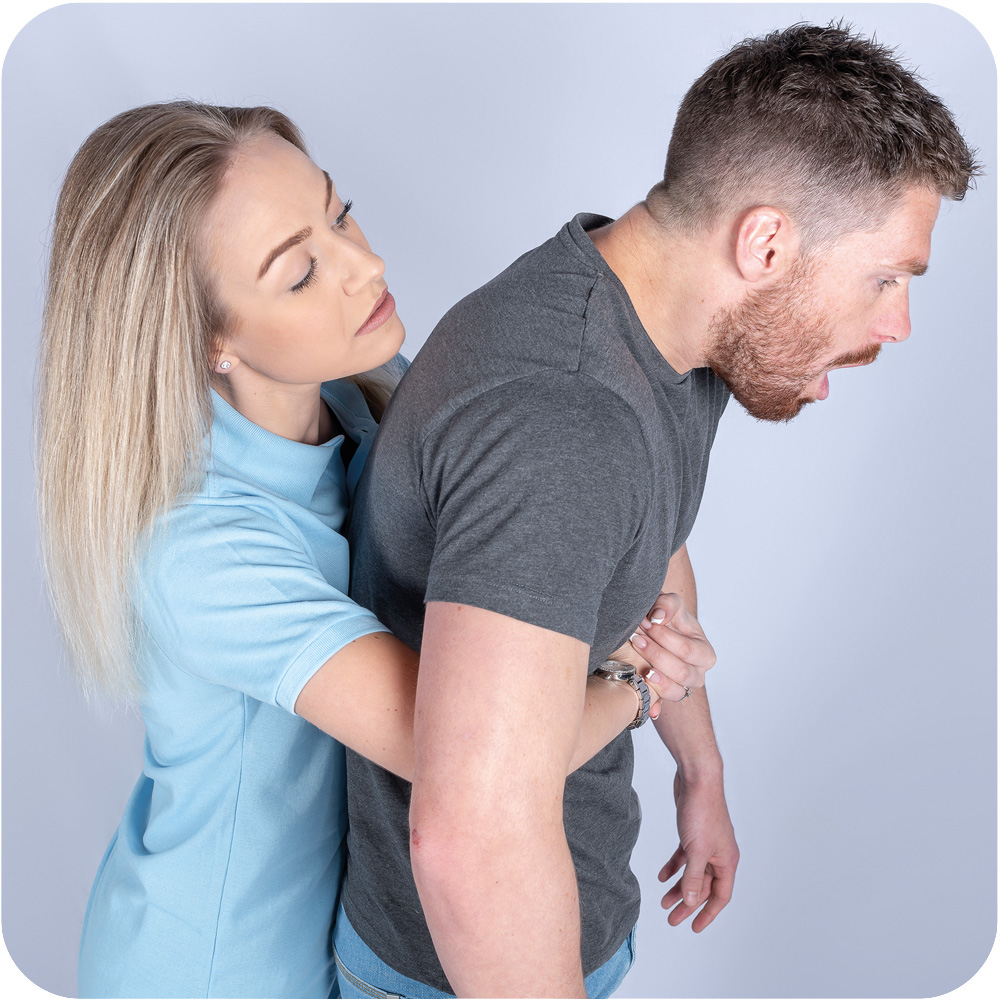
- Check to see if each abdominal thrust has relieved the airway obstruction. The aim is to relieve the obstruction with each thrust rather than to give all five unnecessarily

- If you have performed abdominal thrusts on a casualty, they must be sent to hospital to be examined for any internal injuries

If the obstruction cannot be removed after the first cycle of back blows and abdominal thrusts, then you must call for an ambulance immediately.
Repeat the process of up to five back blows followed by up to five abdominal thrusts until the casualty recovers, or the emergency medical services take over from you.

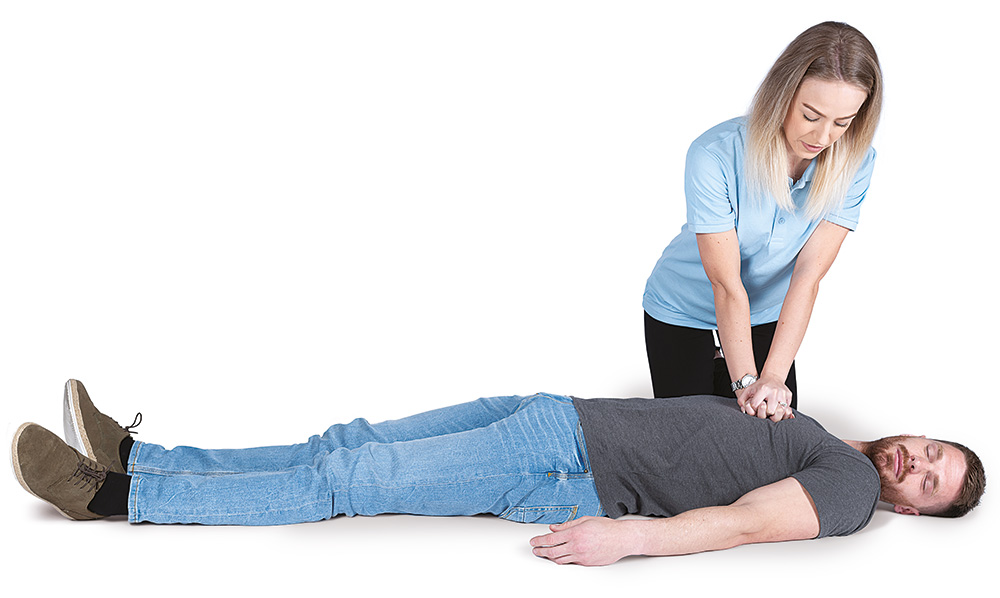
If your casualty becomes unresponsive, help them to the floor onto their back, call 999/112 and commence CPR immediately. Before each rescue breath attempt, check in the mouth for any visible obstruction that can be removed easily without having to sweep the mouth with your fingers.